What Temperature Should You Set Your Air Conditioning To?
The best temperature for air conditioning in summer and winter, how your setting affects running costs, and simple tips for cooler, comfortable nights.
By GreenAir Air Conditioning6 min read
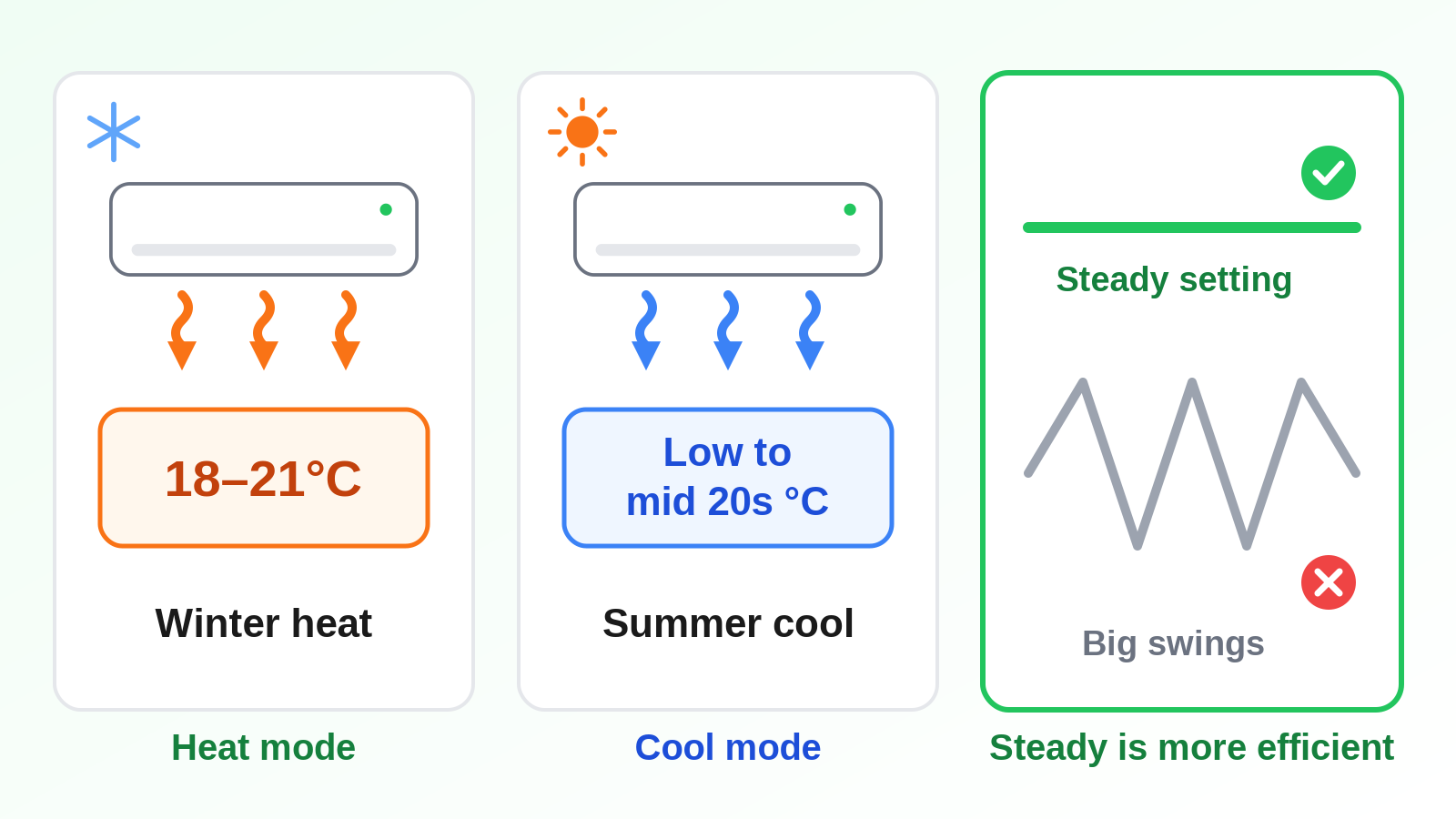
There is no single perfect number, but there are sensible ranges. In winter, most people are comfortable heating with air conditioning at 18°C to 21°C. In summer, a cooling setting in the low to mid 20s °C usually feels comfortable without making the system work harder than it needs to. This guide explains why, how your setting affects running costs, and what to do at night.
The short answer
| Season | Mode | Good starting point | Why |
|---|---|---|---|
| Winter | Heat | 18°C to 21°C | Warm enough for most people, and every extra degree costs more |
| Summer | Cool | Low to mid 20s °C | Takes the edge off the heat without overworking the unit |
| Muggy days | Dry | Similar to your cooling setting | Removes moisture so the room feels fresher |
| Night | Heat, cool or sleep mode | A little different from your daytime setting | Steady and quiet is more comfortable than big swings |
Treat these as starting points, then adjust a degree at a time until it feels right for you and your household.
Winter: heating with air conditioning
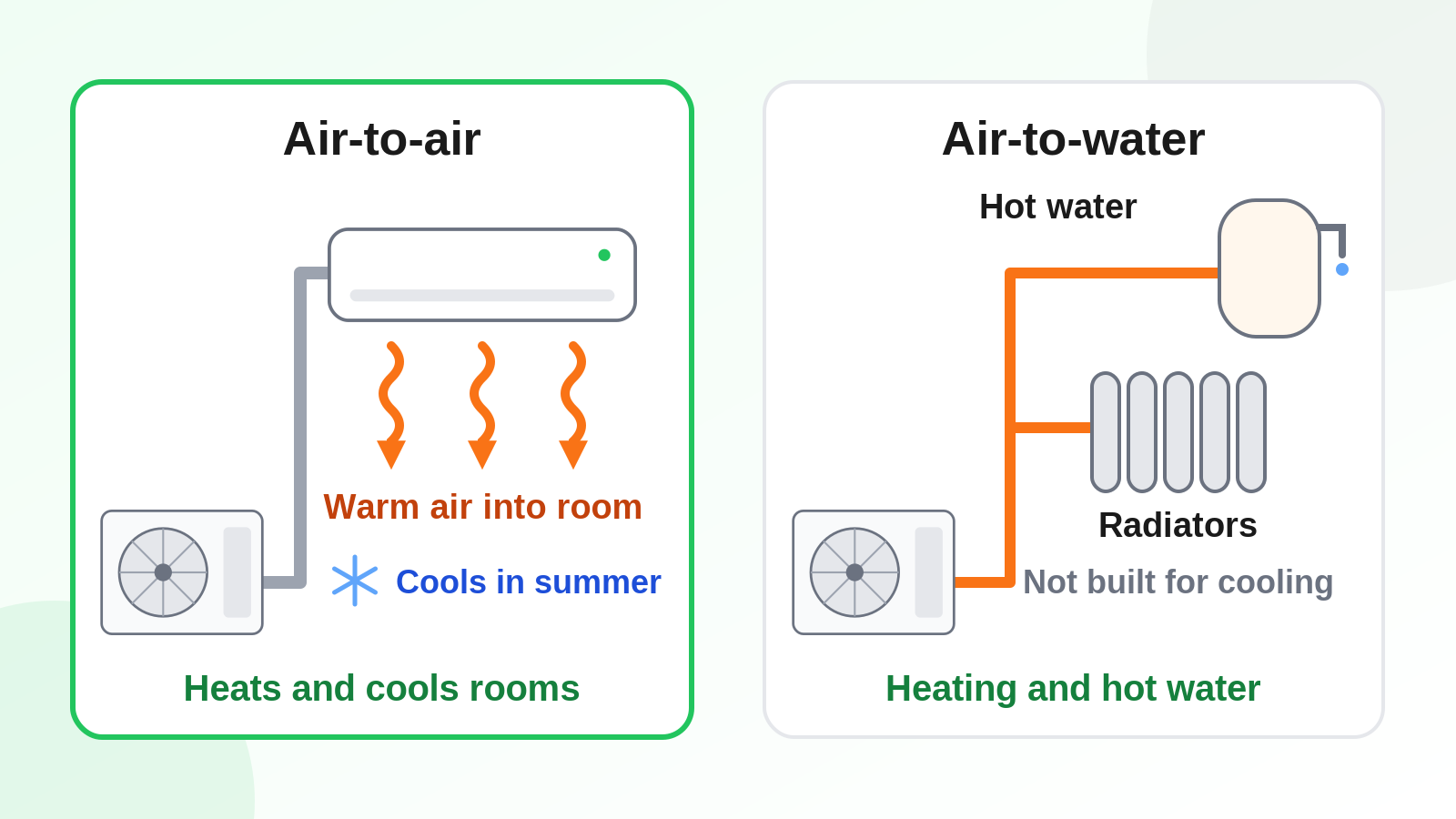
Most modern split air conditioners can heat as well as cool, working as an air-to-air heat pump that moves heat from the outside air into your room.
What the official guidance says
UK health guidance focuses on keeping warm enough. The government's Keep Warm Keep Well advice recommends trying to heat the rooms you spend a lot of time in, such as the living room or bedroom, to at least 18°C. This matters most for older people and anyone with a health condition. If you have a medical condition, follow the advice of your GP or care team over any general guide.
The Met Office's advice on keeping your home warm also uses 18°C as the benchmark, and notes that a healthy, active adult under 65 who is dressed for the weather may be comfortable a little below that.
On the energy side, the Energy Saving Trust suggests setting your heating to the lowest temperature you find comfortable, which for most people is between 18°C and 21°C.
Why the number on the remote may not match the room
Your air conditioner measures temperature at the indoor unit, which is usually mounted high on the wall. Warm air rises, so the air up there can be warmer than the air where you are sitting. If the room feels cooler than the setting suggests, nudge it up a degree rather than assuming something is wrong. Some remotes have a "follow me" or "I feel" feature that measures temperature at the remote instead. Your manual will say whether yours does.
Summer: cooling without overdoing it
There is no official UK target for a cooled room, so this comes down to comfort and cost. Many manufacturers suggest starting in the low to mid 20s °C and adjusting from there.
Setting it lower does not cool the room faster
This is a common misunderstanding. Setting the remote to 16°C on a hot afternoon will not get the room cool any quicker than setting it to 22°C. Most units cool at full speed until they reach your set point either way. A very low setting just means the system keeps running hard for longer, uses more electricity and can leave the room uncomfortably cold.
Keep the gap sensible
The bigger the difference between the temperature outside and the temperature you ask for inside, the harder the system has to work. On a very hot day, aiming for a room that is pleasantly cooler, rather than chilly, is kinder to your electricity bill and avoids that shock of stepping from a cold room into the heat.
Help your air conditioning out
Simple steps reduce how much heat gets into the room in the first place. The UK Health Security Agency's Beat the Heat checklist recommends closing curtains or blinds on windows that get direct sun during the day, and opening windows when it is cooler outside, such as at night. Those habits mean your air conditioning has less to do.
Use dry mode on muggy days
British summers are often humid rather than scorching. On a sticky day, dry mode (sometimes shown as a water-drop symbol) removes moisture from the air at a gentle fan speed. Lower humidity makes a room feel fresher even if the temperature only drops a little.
How your setting affects running costs
Every degree you heat above or cool below what you really need is extra work for the system, and that shows up on your bill. The good news is you can work out your own running costs with a simple formula:
Power the unit is using (kW) × hours running × your tariff (pence per kWh) = cost in pence
For example, if a unit averages 0.5 kW over 4 hours and you pay 25p per kWh, that is 0.5 × 4 × 25 = 50p. Swap in your own tariff from your energy bill and the figures from your unit's display, app or manual. Real use varies because inverter units speed up and slow down as the room gets close to your set temperature.
For a fuller comparison with plug-in heaters, see air conditioning vs electric heaters.
Steady beats on-and-off
Modern inverter air conditioners (ones whose compressor can run at variable speed) are at their most efficient when holding a steady temperature. Switching the unit off completely and then blasting it at a very high or very low setting when you get home makes it run flat out for longer.
A better approach:
- Pick a comfortable setting and leave it. Small adjustments of a degree are better than big jumps.
- Use the timer or schedule. Have the unit come on a little before you get up or get home, so the room is comfortable when you need it.
- Use eco or smart features if you have them. Many systems can be controlled from a phone, which makes it easy to adjust things while you are out.
- Close doors. You are only heating or cooling the room the unit is in, so keep the door shut.
What temperature for sleeping?
Many people find a bedroom that is a little cooler than their daytime setting more comfortable for sleeping, but what feels right is personal. A few tips:
- Use sleep or night mode. On many models this gradually adjusts the temperature by a degree or so over the night and keeps the fan quiet. Check your manual for exactly what yours does.
- Set a lower fan speed. A quiet, gentle airflow is less likely to disturb you.
- Angle the louvres away from the bed. Air blowing directly on you feels much colder than the room temperature.
- In winter, keep the bedroom warm enough. The government's cold weather advice is to heat the bedroom before you go to bed, and older people and those with health conditions in particular may benefit from it staying at 18°C or above overnight.
When the setting is right but the room is not
If you have set a sensible temperature and the room still never gets there, the setting is probably not the issue. Common causes include:
- Dirty filters restricting airflow. Our servicing guide explains how often to clean them and when to book a service.
- The wrong mode, such as fan or dry when you meant cool or heat.
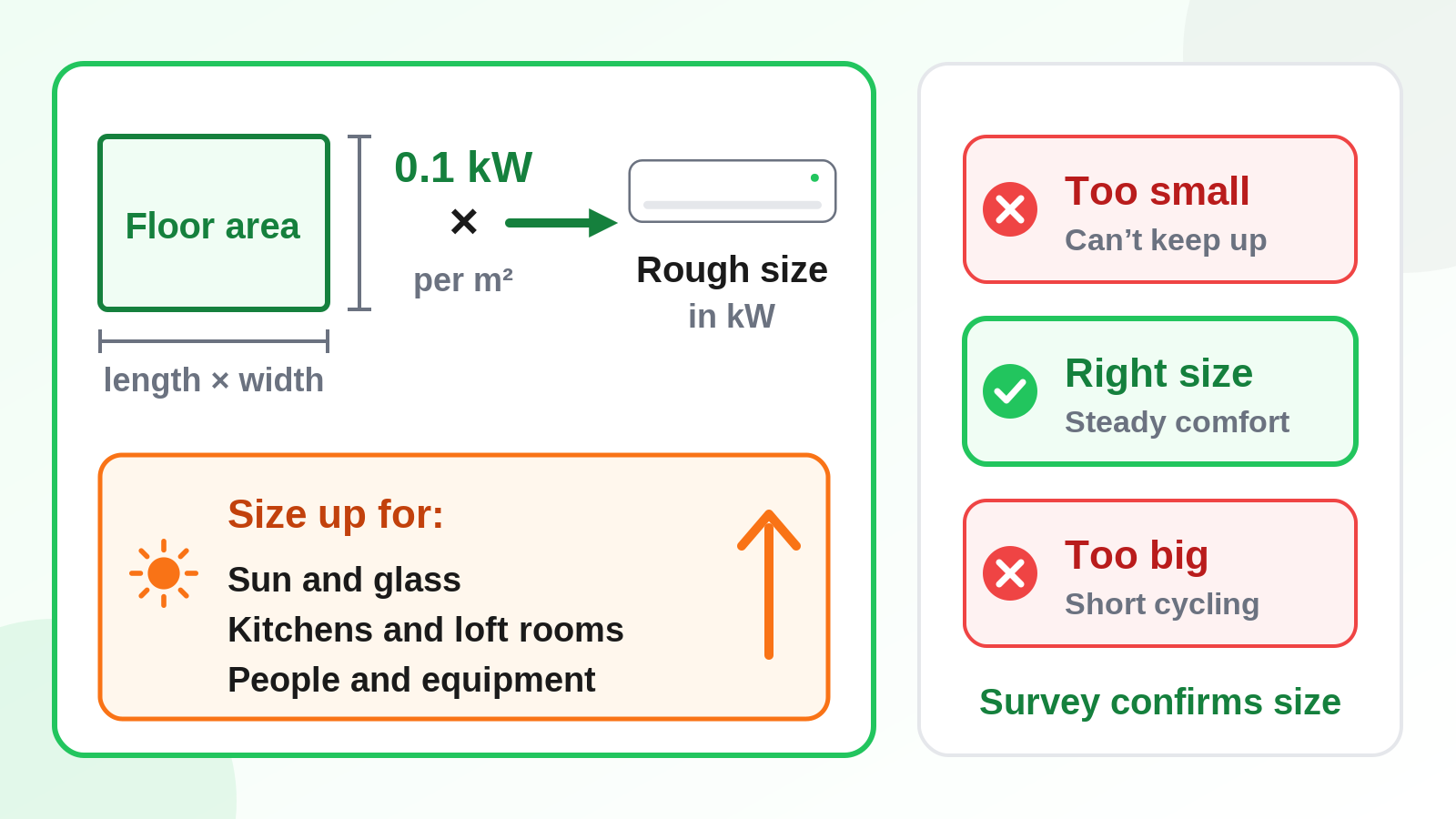
- A unit that is too small for the room, particularly in conservatories, lofts and rooms with a lot of glass.
- A fault, such as a refrigerant leak. Refrigerant work must, by law, be carried out by an F-gas certified engineer, so do not open the unit yourself.
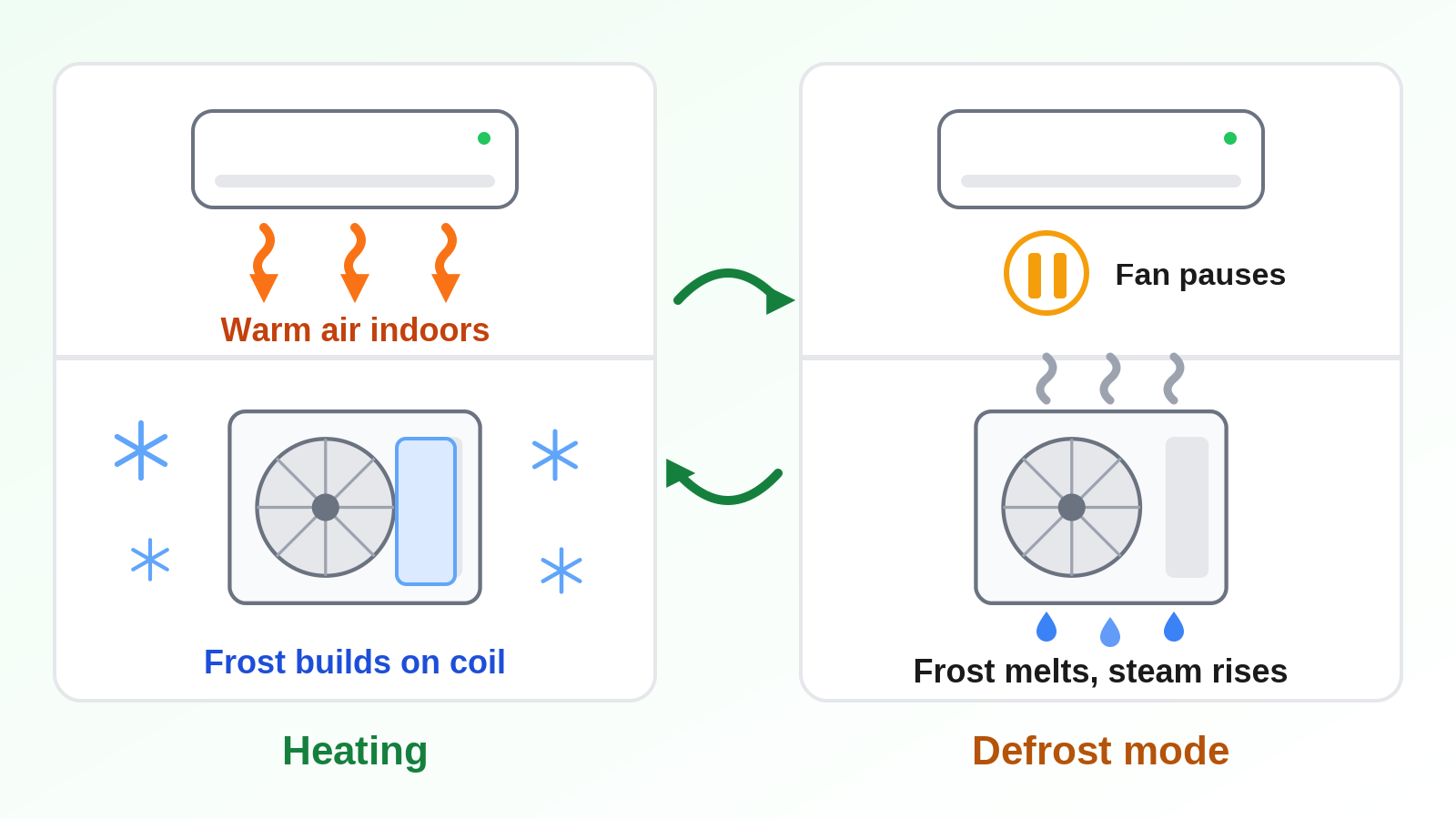
In winter, a unit that stops blowing warm air for a few minutes may just be defrosting. Our guide to defrost mode explains what is normal.
Need help getting comfortable?
If your system struggles to hold a comfortable temperature, a service often makes a real difference. GreenAir services, repairs and installs air conditioning for homes and businesses across Birmingham and the West Midlands. Find out more about our air conditioning servicing and installation, or contact us for a free quote.