Air-to-Air vs Air-to-Water Heat Pumps: What's the Difference?
Air-to-air vs air-to-water heat pumps explained: how each heats your home, hot water, cooling, installation and grants, so you can pick the right one.
By GreenAir Air Conditioning6 min read
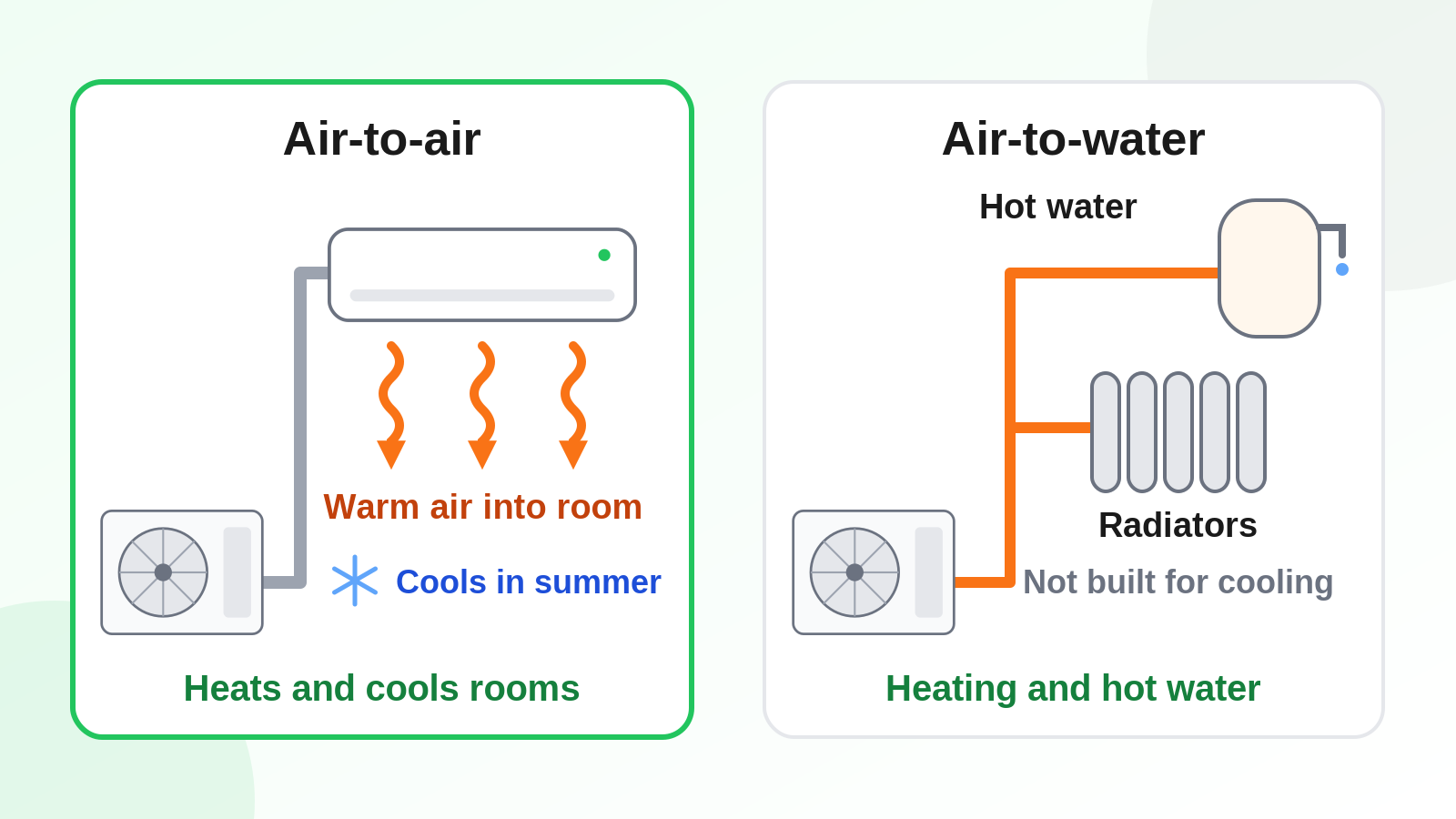
Both types of heat pump take heat from the outdoor air. The difference is where they put it: an air-to-air heat pump blows warm air straight into a room, while an air-to-water heat pump heats water for your radiators, underfloor heating and hot water tap. Which one suits you depends on whether you want to replace your boiler, add heating and cooling to a few rooms, or both.
We install air-to-air systems (what most people call air conditioning), so we will be upfront about where the other type is the better choice.
How both types work
Every heat pump does the same basic job. An outdoor unit draws in air, a refrigerant inside the system absorbs heat from it (even on a cold day), and a compressor concentrates that heat to a useful temperature. Because the system moves heat rather than making it from scratch, it delivers several units of heat for every unit of electricity it uses.
What happens next is where the two types part company.
Air-to-air: warm air into the room
With an air-to-air heat pump, refrigerant pipes run from the outdoor unit to one or more indoor units: usually a wall-mounted unit, or a ceiling cassette in larger spaces. A fan blows air across the warm coil and into the room.
Run the cycle in reverse and the same system cools the room in summer. That is why air-to-air heat pumps and split air conditioning are, in practice, the same thing. We explain this in more detail in can air conditioning heat your home?
Air-to-water: hot water for radiators and taps
With an air-to-water heat pump, the outdoor unit heats water instead of air. That water flows around your central heating, through radiators or underfloor pipes, and heats a hot water cylinder for baths and showers. It does the job a gas or oil boiler does today.
The key differences at a glance
| Air-to-air | Air-to-water | |
|---|---|---|
| How heat reaches you | Warm air from an indoor unit | Radiators or underfloor heating |
| Hot water for taps and showers | No | Yes, via a hot water cylinder |
| Cooling in summer | Yes, built in | Not usually with radiators |
| Replaces a boiler on its own | No, unless you have another hot water source | Yes, designed to |
| Room-by-room control | Yes, each indoor unit has its own | Usually by zone or radiator valve |
| Warm-up speed | Fast, because it heats the air directly | Slower, steady background heat |
| Uses radiators | No | Yes; some may need upgrading |
Heating: how each one feels
Air-to-air systems warm a room quickly. You switch on, and warm air starts moving within minutes. That makes them good for rooms you use at set times, such as a home office or a lounge in the evening, and for rooms your existing heating never quite reaches.
Air-to-water systems work best running steadily at a lower water temperature than a boiler. Radiators feel warm rather than hot, and the house is kept at an even temperature over the day. For that to work well, the home usually needs to be reasonably well insulated and the radiators sized correctly, which is why some homes need larger radiators when they switch.
Both types are efficient. In typical UK winter conditions, a good system can deliver around 3 to 4 units of heat for each unit of electricity, and the seasonal figure is shown on the product's energy label. If you want to compare that against a plug-in heater, our air conditioning vs electric heaters guide walks through the sums with your own tariff.
Hot water: the deciding factor for many homes
This is the biggest practical difference. An air-to-air heat pump does not heat water. If your boiler also provides your hot water, an air-to-air system will not replace it on its own. You would keep the boiler, or use another hot water source such as an electric immersion heater in a cylinder.
An air-to-water heat pump is designed to provide both space heating and hot water, so it can replace a boiler completely. It does need space for a hot water cylinder, which can be an issue in homes that currently have a combi boiler and no airing cupboard.
Cooling: only one of them does it easily
If summer heat is a problem, air-to-air has a clear advantage. The same indoor units that heat in winter cool and dehumidify in summer, with no extra equipment.
Air-to-water systems are mainly built for heating. Radiators are not designed to cool a room, so if you want cooling as well, an air-to-water system on its own is not the answer.
Installation: what is involved
Air-to-air
- An outdoor unit, on a wall bracket or the ground.
- One or more indoor units, connected by a small bundle of refrigerant pipe, cable and a condensate drain through the wall.
- No changes to your central heating, radiators or hot water.
- Can be added room by room, so you only pay for the rooms that need it.
Because the work involves refrigerant, it must be done by an F-gas certified engineer. That is a legal requirement in the UK. You can read what to expect on our installation page.
Air-to-water
- A larger outdoor unit.
- A hot water cylinder, and often other components indoors.
- A heat loss survey of the whole house to size the system.
- Possibly larger radiators or new pipework.
It is a bigger project that changes how your whole home is heated, and it is normally carried out by a specialist heating installer.
Grants: the Boiler Upgrade Scheme
The government's Boiler Upgrade Scheme offers grants towards heat pumps in England and Wales. At the time of writing, the official guidance lists:
- £7,500 towards an air-to-water or ground source heat pump.
- £2,500 towards an air-to-air heat pump, in homes only. Air-to-air heat pumps became eligible on 28 April 2026.
There are conditions. The installer must be MCS certified and applies for the grant on your behalf, and the heat pump has to fully replace your existing fossil fuel heating, such as a gas or oil boiler. That means an air-to-air system added alongside a boiler you are keeping will not qualify. There are further property requirements too.
The scheme changed several times during 2026, so check the current rules on GOV.UK and in Ofgem's Boiler Upgrade Scheme guidance before relying on any figure, and ask any installer you speak to whether they are MCS certified and can apply for it.
Which one is right for you?
Choose air-to-air if:
- You want to heat and cool specific rooms rather than the whole house.
- Your central heating struggles in an extension, loft conversion, conservatory or garden room.
- You want fast, room-by-room control and summer cooling.
- You are happy to keep your boiler for hot water, at least for now.
Choose air-to-water if:
- You want to replace your boiler completely, including hot water.
- Your home is well insulated, or you are planning insulation work.
- You have, or can make, space for a hot water cylinder.
- Cooling is not a priority.
Or use both
Plenty of homes end up with a mix: a boiler or air-to-water system for background heat and hot water, plus air-to-air units in the rooms that overheat in summer or need a boost in winter. There is no rule that says you must pick one.
Keep it running well
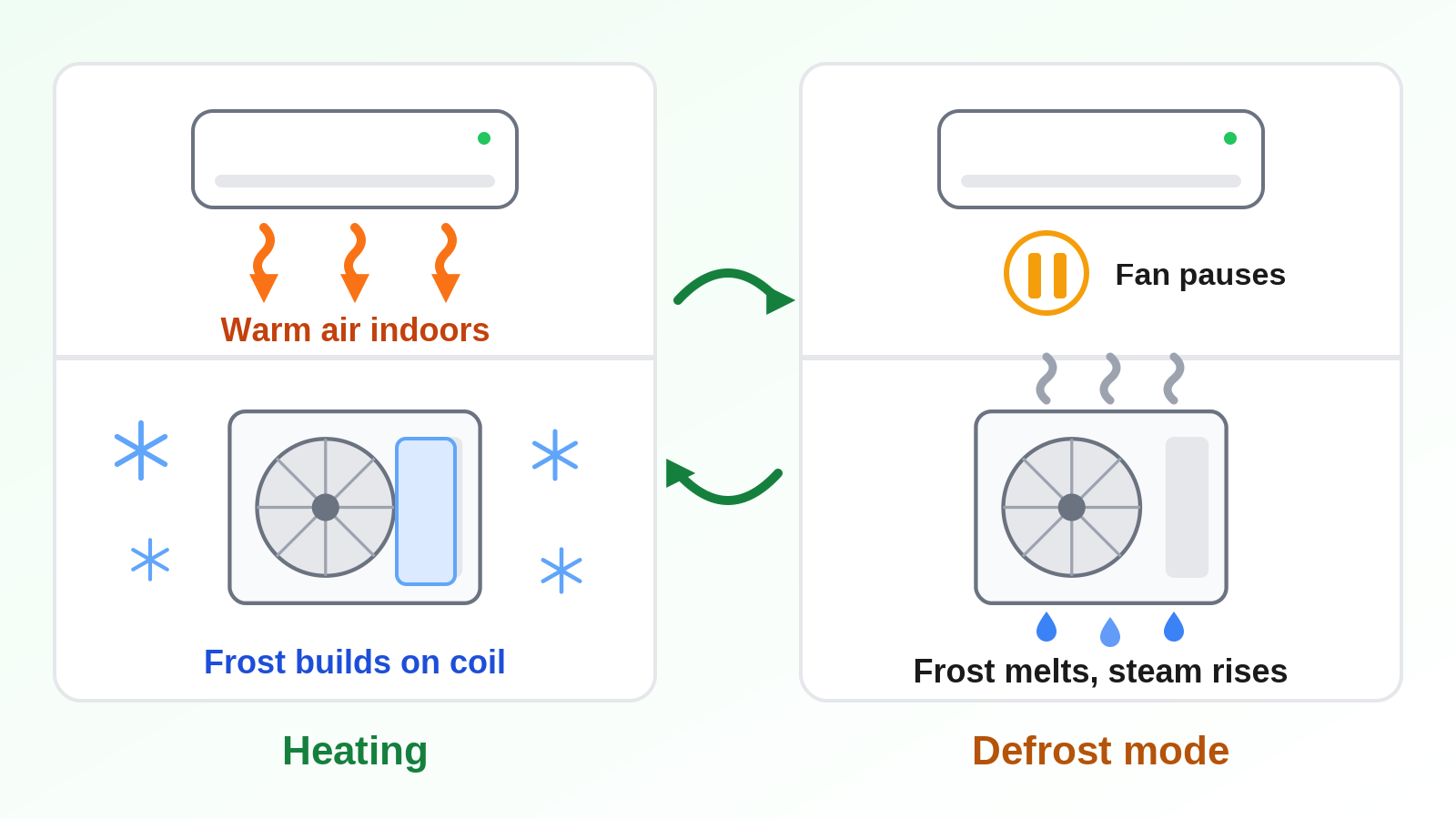
Whichever type you choose, regular servicing keeps efficiency up. Air-to-air outdoor units also go through a normal defrost cycle in cold, damp weather, which can look like a fault if you are not expecting it. See why your air conditioner stops heating in winter.
Talk to us about air-to-air heating and cooling
If an air-to-air system sounds like the right fit for a room or two, we install heat pump air conditioning in homes and businesses across Birmingham and the West Midlands. We will look at the rooms, your existing heating and how you use the space, and tell you honestly whether it makes sense. See our installation service or get a free quote.