Air Conditioning vs Electric Heaters: Which Is Cheaper to Heat a Room?
Is air conditioning cheaper than electric heaters? A worked cost comparison you can redo with your own tariff, and when a heater still makes sense.
By GreenAir Air Conditioning6 min read
If you heat a room with a plug-in electric heater, a modern air conditioner in heating mode will usually do the same job for a fraction of the electricity. The reason is simple physics, and you can check the sums yourself with the prices on your own energy bill. This guide walks through the comparison, and is honest about when a heater is still the sensible choice.
Why the two use such different amounts of electricity
Both an electric heater and an air conditioner run on electricity, so it is fair to ask why one should be cheaper. The difference is in what they do with it.
Electric heaters turn electricity into heat
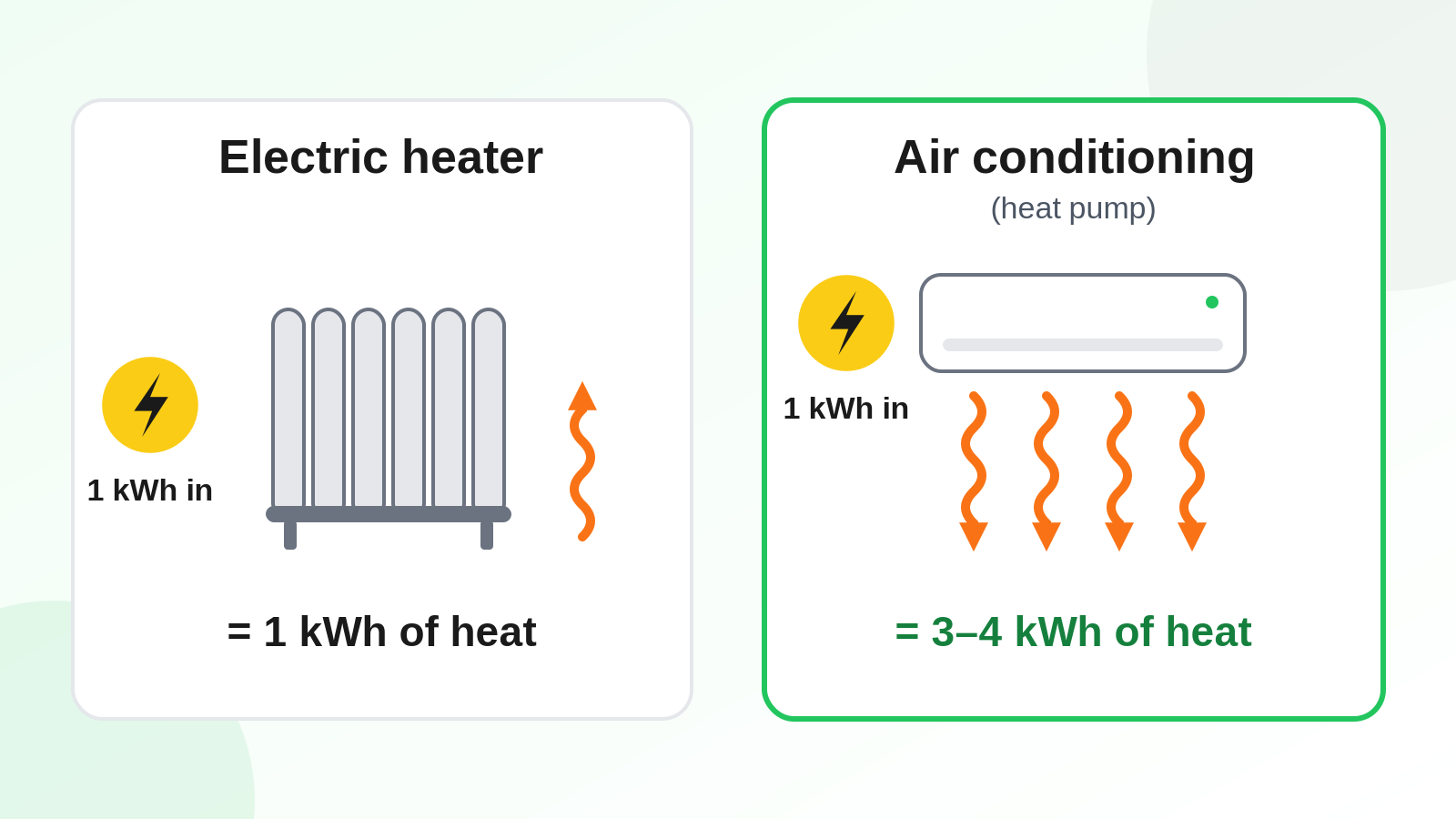
Fan heaters, oil-filled radiators, convector heaters, panel heaters and infrared panels all work the same basic way: electricity flows through a resistance element and becomes heat. They are often described as "100% efficient", and that is true at the point of use. Every unit of electricity becomes one unit of heat in the room.
The catch is that 100% is the ceiling. A 2 kW heater uses 2 kW of electricity to give you 2 kW of heat, no more.
Air conditioning moves heat instead of making it
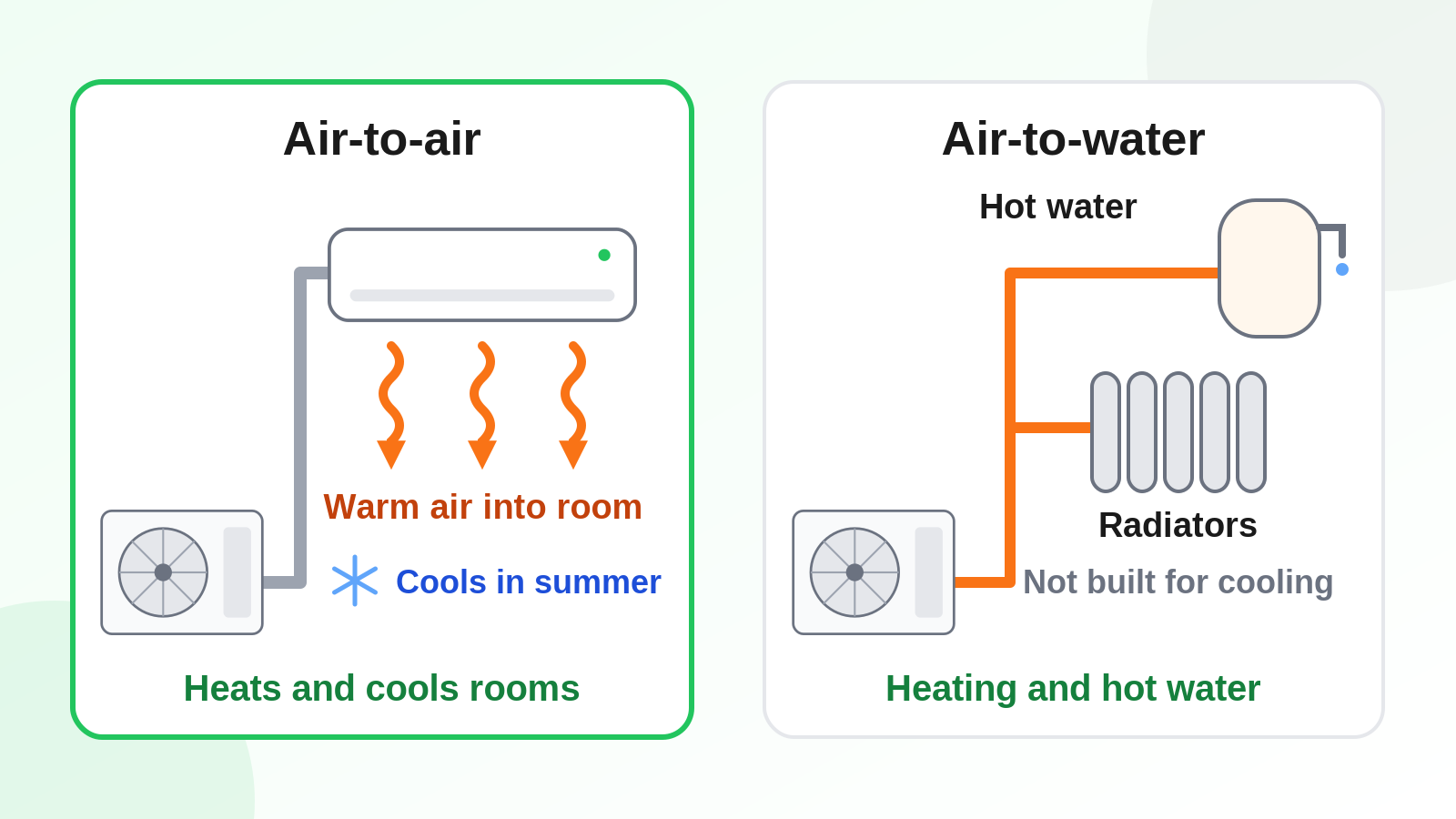
Almost every modern split air conditioner is a heat pump. In heating mode it pulls heat out of the outdoor air, even on a cold day, concentrates it and releases it indoors. The electricity runs the compressor and fans; it is not turned directly into heat.
Because it is moving heat rather than creating it, a heat pump can deliver several units of heat for every unit of electricity. Manufacturers show this on the energy label as SCOP (Seasonal Coefficient of Performance), which is the average across a typical heating season. A SCOP of 4 means, on average, 4 kWh of heat for every 1 kWh of electricity. For more on how this works, see our guide to how air conditioning heats your home.
The running-cost comparison, worked through
You do not need to take our word for it. The sum is the same for any electric heating:
Cost per hour = heat needed (kW) ÷ efficiency × your electricity price (p per kWh)
For a plug-in heater the efficiency is 1. For an air conditioner, use its SCOP as a fair seasonal average.
Our example assumptions
- A room that needs 2 kW of heat to stay comfortable on a winter evening.
- Heating it for 5 hours a day, so 10 kWh of heat.
- Electricity at 26p per kWh. That is close to the average unit rate under the Ofgem energy price cap for direct debit customers in late 2026, but rates vary by region and supplier, so swap in the figure from your own bill.
The results
| Heating method | Electricity used for 10 kWh of heat | Cost per evening at 26p/kWh |
|---|---|---|
| Electric heater (efficiency 1) | 10 kWh | £2.60 |
| Air conditioning, SCOP 3 | about 3.3 kWh | about 87p |
| Air conditioning, SCOP 4 | 2.5 kWh | 65p |
In this example the air conditioner costs between a quarter and a third of what the heater does to deliver the same warmth. Over a winter, that gap adds up. If you heated that room on 100 evenings, the same sum gives roughly £260 for the heater against £65 to £87 for the air conditioner.
Try it with your own numbers
- Find your electricity unit rate on your bill (in pence per kWh).
- Estimate how many hours a day you heat the room, and the power of the heater you use now. A heater left on full power is a reasonable stand-in for "heat needed".
- Multiply heater power × hours × unit rate for the heater cost.
- Divide that figure by the SCOP of the air conditioning unit you are considering for its approximate cost.
If you are on a time-of-use tariff, the same method works; just use the rate for the hours you actually heat.
Things that change the picture
The comparison above is a fair guide, but real life is a little messier.
- Cold weather lowers heat pump efficiency. The colder it is outside, the harder the unit works to gather heat, so efficiency on a freezing night is lower than the seasonal SCOP. It is still well above an electric heater's 1, which is why SCOP (a seasonal average) is the right figure to compare.
- Defrost cycles. In cold, damp weather the outdoor unit occasionally pauses heating to clear frost from its coil. This is normal, and the SCOP already allows for it.
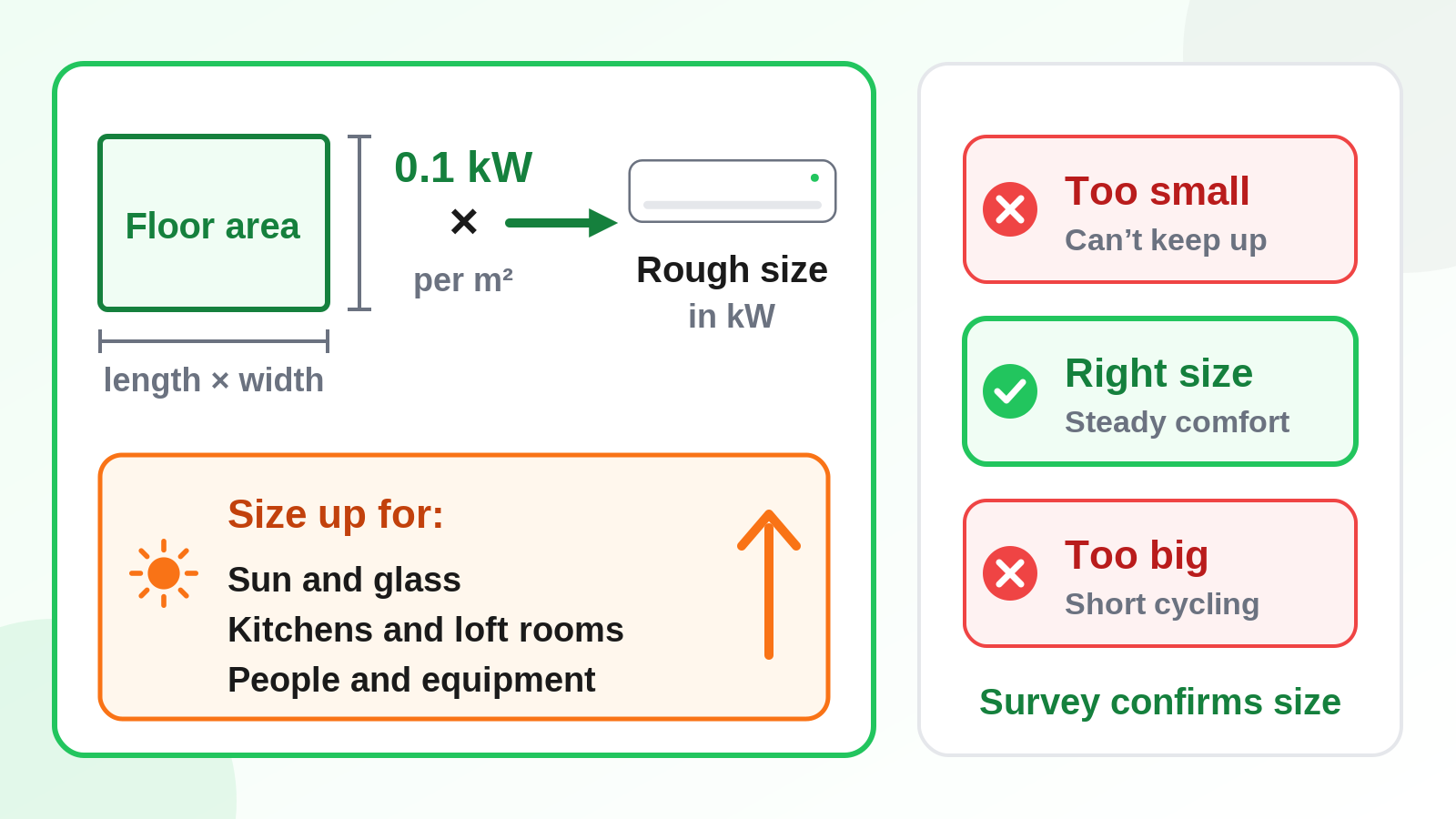
- Sizing and installation matter. An undersized unit runs flat out and struggles; a badly sited outdoor unit can't breathe. A proper survey checks the room's heating demand, not just its cooling demand.
- Maintenance. Dirty filters and coils cut efficiency in heating mode just as they do in summer. See how often air conditioning should be serviced.
- Upfront cost. A plug-in heater costs very little to buy. Air conditioning is an installed system, so the running-cost saving has to be weighed against the installation price. Our air conditioning cost guide explains what affects that.
When an electric heater is still the sensible choice
We would rather you spend your money wisely than buy a system you don't need. A plug-in heater can be the better answer if:
- You only heat the room occasionally, for example a spare bedroom used a few nights a year. The savings would take a very long time to cover installation.
- You need heat for a few minutes at a time, such as a quick blast in a bathroom (where a split air conditioner would not be suitable anyway).
- You rent and can't make alterations. Installing a split system means a small hole through the wall and an outdoor unit, which needs the owner's permission.
- You need something portable to move from room to room.
When air conditioning makes far more sense
Air conditioning tends to pay its way when a room is heated regularly and for long periods. Typical examples:
- Home offices used all day through the winter.
- Extensions, loft conversions and north-facing rooms that the central heating never quite reaches.
- Conservatories and garden rooms that are cold in winter and far too hot in summer.
- Shops, salons and small offices where heaters have been running for most of the working day.
And there is the obvious bonus: the same unit cools the room in summer, which no electric heater can do. It also lets you control each room on its own schedule, so you heat only the space you're using.
A note on safety
Plug-in heaters need care: keep them clear of curtains, furniture and drying clothes, and follow the manufacturer's safety instructions. A fixed air conditioning unit is mounted high on the wall and wired in by a qualified installer, so there is no trailing lead or hot surface at floor level. Any work on the unit itself, including anything involving the refrigerant, must be done by an F-gas certified engineer.
Thinking of swapping your heaters for air conditioning?
If you are running electric heaters for hours every day, it is worth finding out what a heat pump air conditioner would save you. We install heating-and-cooling air conditioning in homes and businesses across Birmingham and the West Midlands, and we will size the system for winter heating, not just summer cooling. Read about our installation service or ask us for a free, no-obligation quote.