Why Does My Air Conditioner Stop Heating in Winter? Defrost Mode Explained
Air conditioner stops heating on cold, damp days? How defrost mode works, why it is normal, and the signs that point to a real fault instead.
By GreenAir Air Conditioning7 min read
If your air conditioner stops blowing warm air for a few minutes on a cold, damp day, and the outdoor unit goes quiet and starts to steam, it is almost certainly in defrost mode. That is a normal, automatic part of heating in winter, not a breakdown. This guide explains what is happening, how to tell it apart from a genuine fault, and when it is worth calling an engineer.
Why an air conditioner needs to defrost
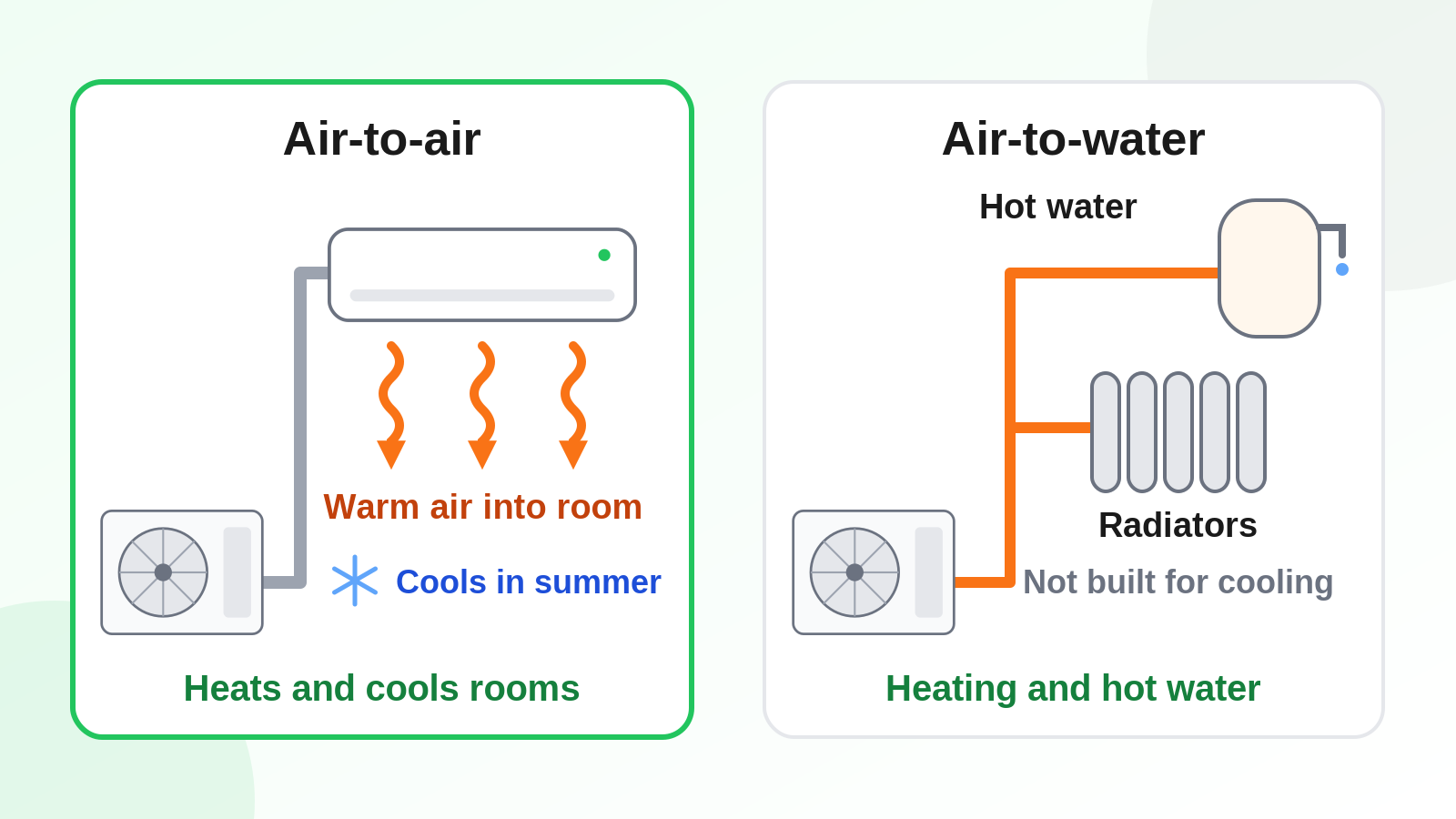
Most modern split air conditioners heat as well as cool. In heating mode they work as an air-to-air heat pump: the outdoor unit pulls heat out of the outside air and the indoor unit releases it into your room. (We cover this in more detail in can air conditioning heat your home?)
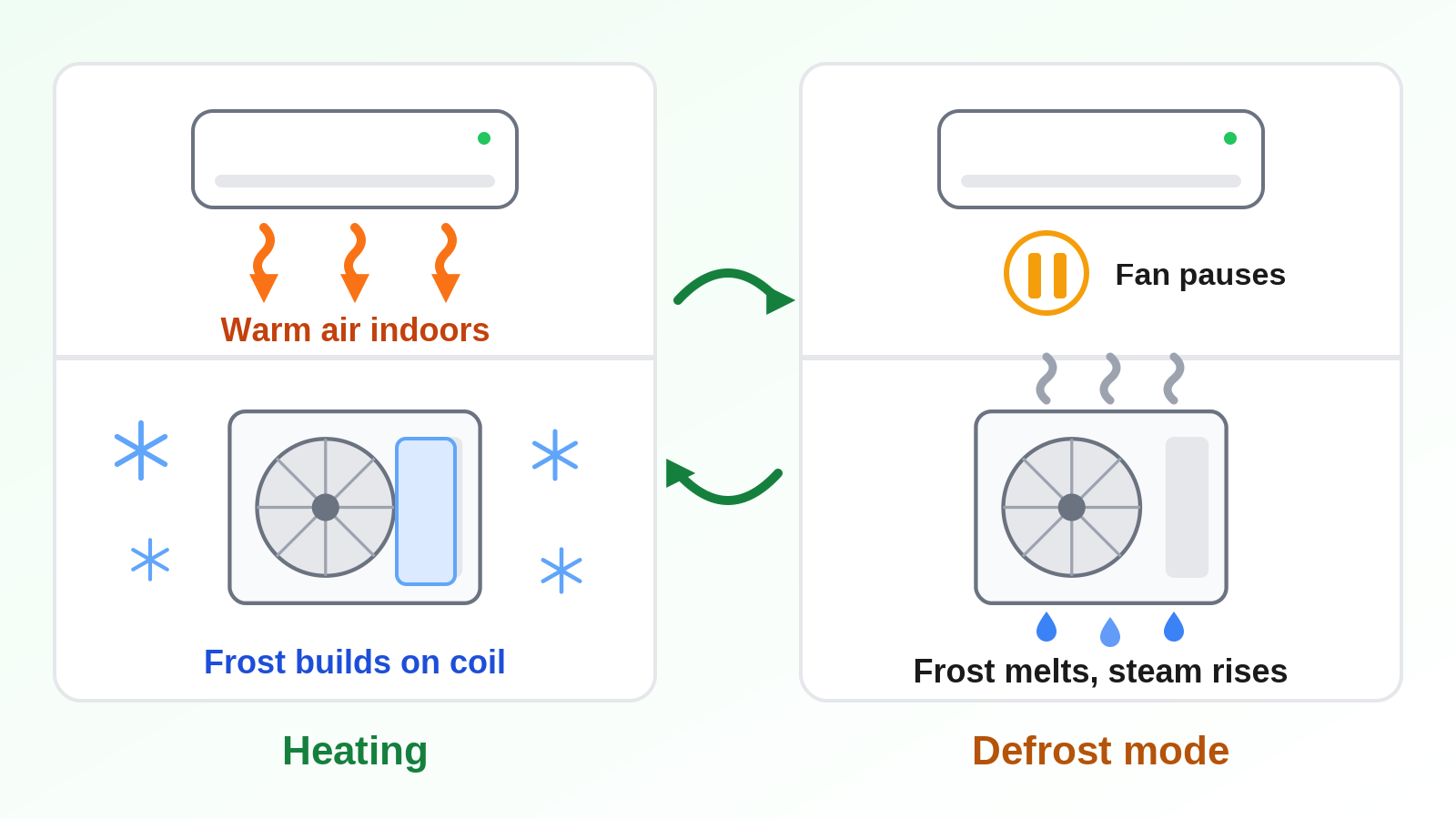
To take heat from cold air, the outdoor coil (the large finned panel at the back or side of the outdoor unit) has to be colder than the air passing over it. When the weather is cold and humid, which describes a lot of British winter days, moisture in the air settles on that cold coil and freezes. A thin layer of frost builds up.
Frost acts like a blanket. It blocks the air flowing through the coil, so the unit gets less heat out of the outdoor air and becomes less efficient. Left alone, it would eventually ice over completely. Defrost mode is how the system clears it.
What happens during defrost mode
When the unit's sensors decide there is enough frost on the outdoor coil, it switches into defrost automatically. You do not need to press anything. Details vary between manufacturers and models, but this is the typical pattern:
- Heating pauses indoors. The indoor fan stops or slows right down, so you do not get a blast of cold air in the room. Some models show a "defrost" or "heat standby" message, or a light on the indoor unit changes. Your user manual will say what yours does.
- The outdoor fan stops. The outdoor unit goes quieter, although the compressor usually keeps running.
- The system briefly reverses. Warmth is sent to the outdoor coil to melt the frost. You may hear a whoosh or hiss as the refrigerant changes direction. That sound is normal.
- Steam and water appear outside. As the frost melts, water drips from the bottom of the outdoor unit and you may see clouds of steam rising from it. Manufacturers such as Daikin confirm this is normal during defrost. It is water vapour, not smoke.
- Heating resumes. Once the coil is clear, the unit switches back to heating. Many units wait until the indoor coil has warmed up again before restarting the indoor fan, so there can be a short extra delay before warm air comes back.
How long does it last?
Usually a few minutes. Depending on the model and how much frost has built up, some manufacturers say it can take up to around 15 minutes. Your manual should give a figure for your unit.
How often does it happen?
There is no single answer. It depends on the weather and the system's design. Defrosting tends to be most frequent when it is close to freezing and the air is damp, because frost forms fastest in those conditions. On a crisp, dry, very cold day you may see it less often. Newer units generally use sensors to defrost only when needed rather than on a fixed timer.
Normal defrost or a real fault? How to tell
Here is a quick way to judge what you are seeing.
| What you notice | Probably normal defrost | Worth getting checked |
|---|---|---|
| Heating stops | For a few minutes, then restarts on its own | Stops for long periods or does not come back |
| Indoor fan | Pauses during defrost | Runs but only ever blows cool air |
| Steam outside | Short bursts while the outdoor fan is stopped | Steam or ice that never clears |
| Ice on the outdoor unit | Light frost that melts during each defrost | Thick ice that keeps building, or ice on the pipes |
| Noises | A whoosh or hiss when it switches over | Grinding, banging or rattling |
| Display | Defrost or standby indicator | An error code or a flashing pattern your manual lists as a fault |
Simple checks you can do yourself
If heating seems to be pausing more than you would expect, a few safe checks can help before you call anyone:
- Give it time. Wait 15 to 20 minutes and see if heating comes back on its own.
- Check the mode and temperature. Make sure it is set to heat (not cool, dry or fan) and that the set temperature is above the room temperature. If the room is already at the set temperature, the unit will ease off anyway.
- Clean the indoor filters. Clogged filters restrict airflow and make the unit work harder. Our servicing guide explains how often this matters.
- Clear around the outdoor unit. Remove leaves, snow or anything leaning against it, so air can flow freely through the coil. Never put a cover over it while it is running.
- Check the meltwater has somewhere to go. Water from defrosting runs out of the base of the outdoor unit. If it cannot drain away, it can refreeze around the bottom of the unit. Make sure the area underneath is not blocked.
What not to do
- Do not chip, scrape or hack at ice on the outdoor unit. The fins and pipes are delicate and easily damaged, and a damaged coil can mean a refrigerant leak.
- Do not open the casing or try to reach anything inside. The outdoor unit contains electrics and refrigerant. Any work on the refrigerant circuit must, by law, be carried out by an F-gas certified engineer.
- Do not keep switching it off and on to "reset" a defrost. Let it finish. Interrupting it can leave ice on the coil.
When to call an engineer
Defrost is a self-correcting process. If the frost is not clearing, or the unit is not heating properly between defrosts, something else is going on. Common causes include:
- Low refrigerant. A system does not use up refrigerant, so if it is low, there is a leak. That needs finding and repairing by a qualified engineer.
- A faulty sensor or control board. If the unit cannot tell when the coil is frosted, it may not defrost when it should, or may defrost far too often.
- A problem with the valve that reverses the system. If the system cannot switch direction, it cannot melt the frost.
- A failing outdoor fan. Poor airflow across the coil makes frost build faster.
- Poor airflow or dirt. A very dirty coil or blocked filters can make icing worse.
Call us if you notice any of the following:
- Ice that keeps building up and does not clear between cycles.
- Heating that stays off for much longer than your manual says defrost should take.
- An error code or warning light.
- Ice on the copper pipes, inside or out.
- Unusual noises beyond the normal whoosh of a changeover.
Our article on signs your air conditioning needs repair covers more warning signs.
How to get better heating through the winter
A few habits help your system cope with cold, damp weather:
- Keep it serviced. Clean coils and filters, and correct refrigerant levels, all help the unit heat efficiently and defrost properly. Autumn is a sensible time to book a service before the cold sets in.
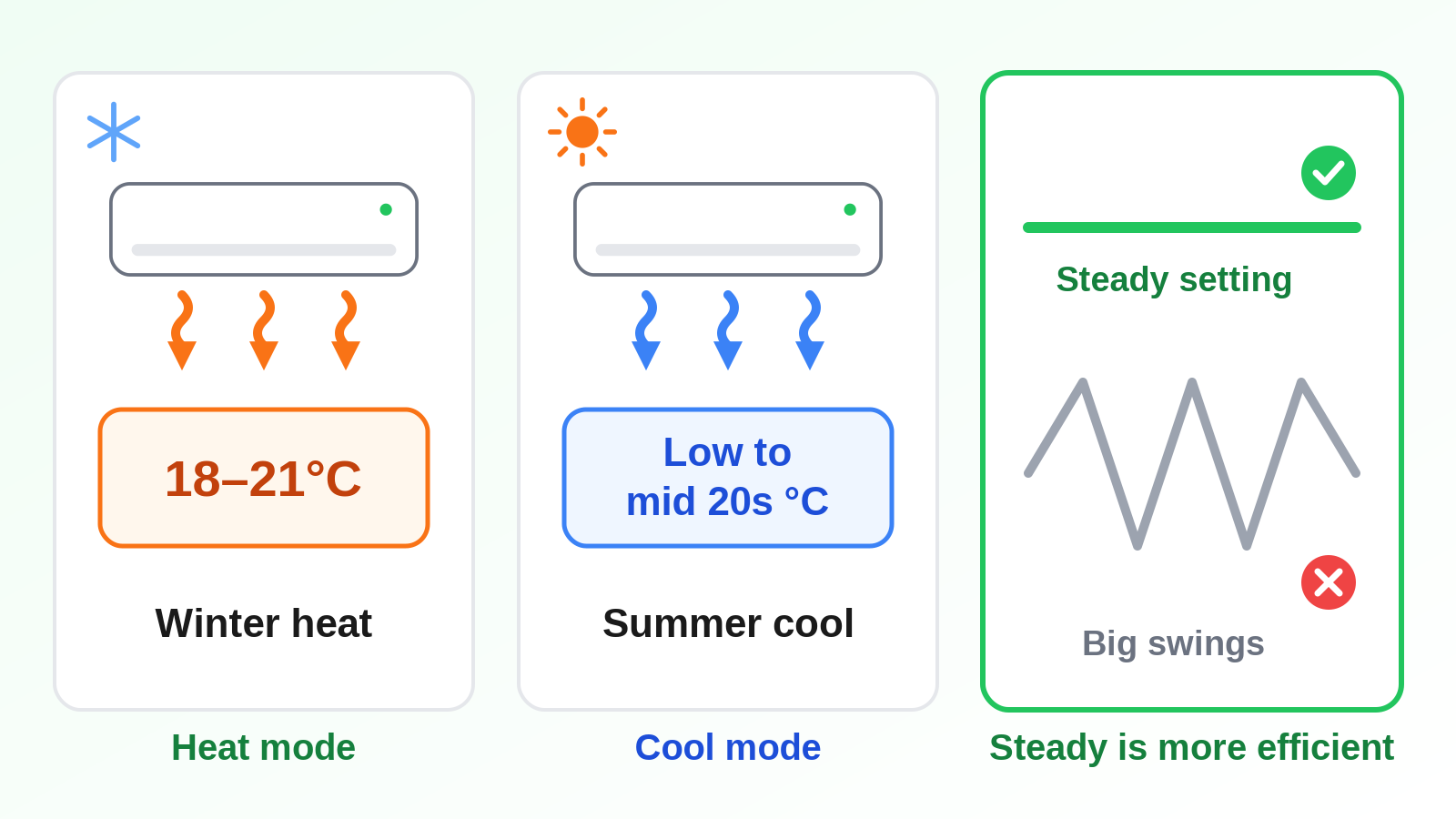
- Use steady settings. Heat pumps work best holding a constant temperature rather than being switched off and blasted back on. A steady setting also means a pause for defrost is less noticeable.
- Think about placement. Outdoor units heat better where air can flow freely and meltwater can drain away, ideally off the ground and out of spots where snow drifts or water pools. If you are planning a new system, this is something we look at during the survey.
Need help with an air conditioner that will not heat?
If you have waited for defrost to finish and your system still is not heating, or the ice will not clear, we can help. GreenAir repairs and services air conditioning for homes and businesses across Birmingham and the West Midlands. Find out more about our air conditioning repair service and servicing, or contact us for a free quote.