Portable vs Split Air Conditioning: Which Is Worth It?
Portable vs split air conditioning compared honestly: how each works, noise, efficiency, the window hose, heating, and which suits your home.
By GreenAir Air Conditioning7 min read
If you are weighing up portable vs split air conditioning, the short answer is this: a portable unit is a quick, cheap fix for occasional hot days, while a split system is the better choice if you want a room to stay comfortable, quiet and efficient for years. Both have their place. This guide explains how each one works, where portables fall short, and how to decide which is worth it for you.
How a portable air conditioner works
A portable air conditioner is a single box on wheels that plugs into a normal socket. Everything happens inside that box: the fan, the cooling coil and the compressor (the pump that drives the whole cooling process).
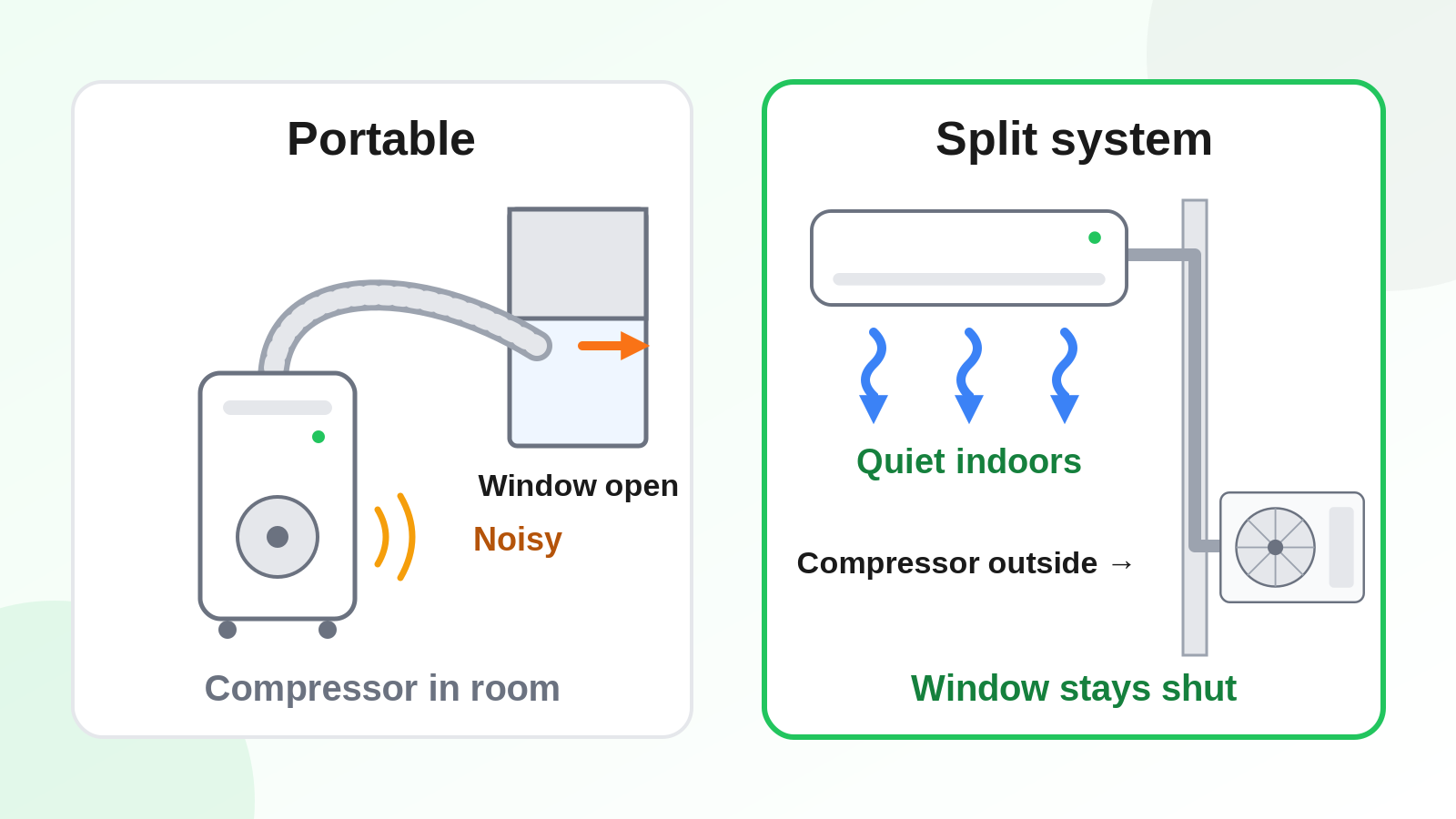
Air conditioning works by moving heat from inside the room to somewhere else. With a portable unit, that heat has to leave through a wide flexible exhaust hose, which you poke out of a window, usually through a fabric or plastic window seal.
Most portables are single-hose units. They take air from the room, use some of it to carry the heat away, and blow it out through the hose. That air has to be replaced, so warm air from outside creeps back in through gaps around doors and windows. It is the main reason single-hose portables struggle on the hottest days. Dual-hose models draw outside air in through a second hose to reduce this, but they are bulkier still.
How a split system works
A split system, the type most people picture when they think of air conditioning in a home or office, splits the job into two parts:
- an indoor unit, usually mounted high on a wall, which blows cool (or warm) air into the room
- an outdoor unit, fixed to an outside wall or on the ground, which holds the compressor and gets rid of the heat
The two are joined by insulated refrigerant pipes, a cable and a drain through a small hole in the wall. No hose, no open window. Because the noisy, hot-running compressor lives outside, the indoor unit only has a quiet fan to run.
Split systems are installed permanently, and because the refrigerant pipes have to be connected and the system tested, the work must be done by a company and engineers certified to handle F-gas refrigerants. The UK government explains the rules for companies working on equipment containing F gas. A portable unit comes sealed from the factory, so you just plug it in.
Portable vs split air conditioning: side by side
| Portable | Split system | |
|---|---|---|
| Installation | Plug in, fit the window hose | Professional installation by a certified engineer |
| Where the compressor is | In the room with you | Outside |
| Noise indoors | Noticeable, as the compressor is in the room | Much quieter, just the indoor fan |
| Window | Has to stay partly open for the hose | Stays shut |
| Efficiency | Lower, especially single-hose units | Higher, especially modern inverter models |
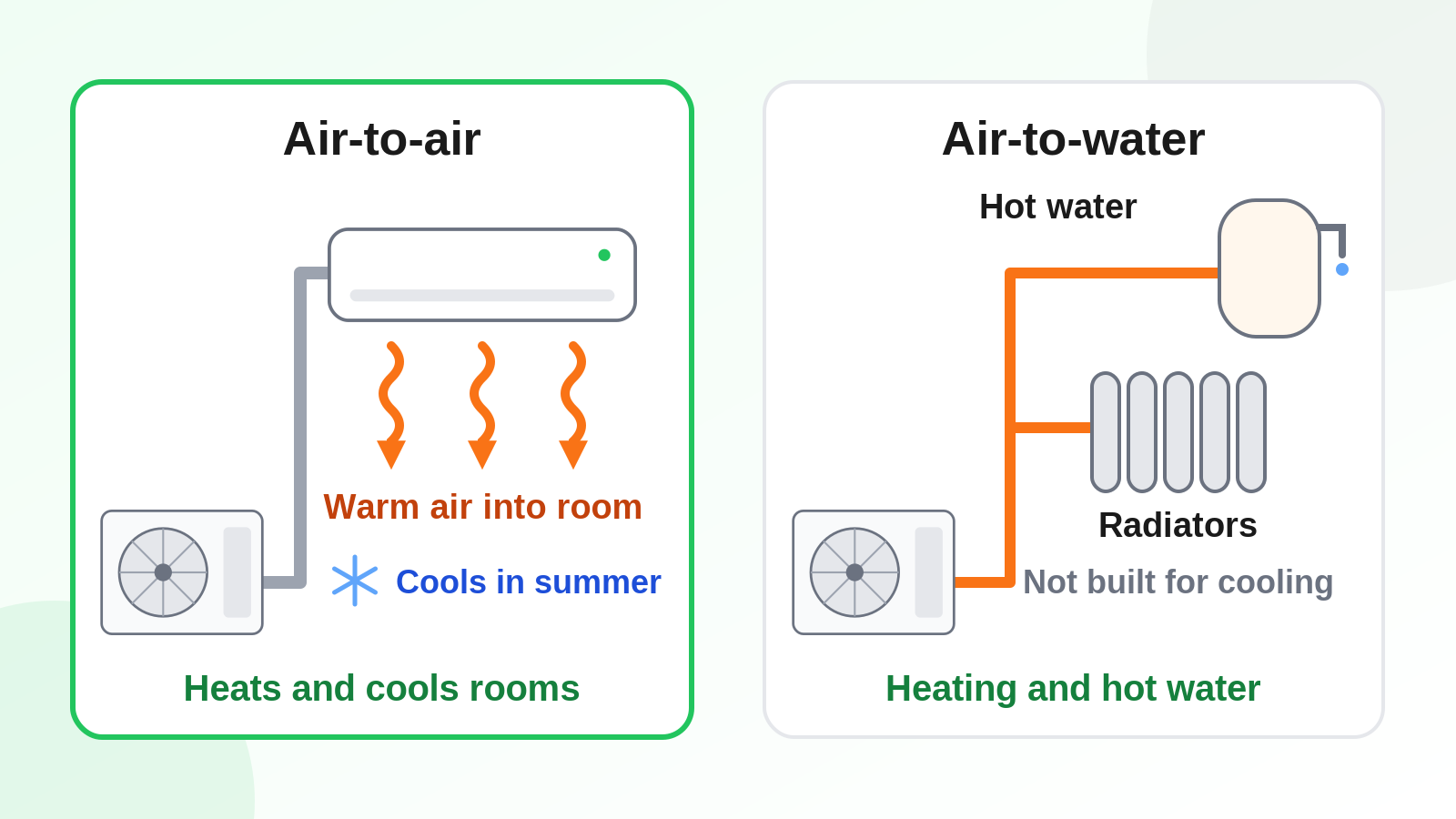
| Heating | Some models, usually limited | Most models heat efficiently as well as cool |
| Floor space | Takes up floor space | Wall-mounted, floor left clear |
| Security | Window seal is a weak point | No change to windows |
| Upfront cost | Low | Higher |
| Moving it | Can be wheeled to another room | Fixed to one room |
Where portable units fall short
Portables are not bad products, but they have built-in limits.
Noise
The compressor is the loudest part of any air conditioner. In a portable, it sits a metre or two from your sofa or bed. Many people buy a portable for a hot bedroom and then find it too loud to sleep with. A split system moves that noise outside, which is why it is usually the better choice for bedrooms and home offices.
The window hose
The hose needs a window held partly open. That lets in some warm air, insects and outside noise, and the gap can be a security worry, especially on the ground floor. The hose only stretches so far, so the unit has to sit near a window.
Efficiency and running costs
A single-hose portable is pushing heat out of the room while warm air leaks back in through the gaps, so it has to work harder for the same result. Split systems avoid that, and modern inverter splits can also slow their compressor down once the room is at temperature, rather than switching on and off.
Be careful comparing energy labels. Portable single-duct units have their own energy label under the energy labelling rules, separate from the label used for split systems, as set out in the UK version of the air conditioner labelling regulation. The rating letters are not worked out the same way, so an "A" on a portable box does not mean it matches an "A" split system. Instead, compare how much cooling each unit gives against how much electricity it uses on the specification sheet.
To work out what any unit might cost you to run, use this simple formula with your own electricity tariff:
Power drawn (kW) × hours used × your price per kWh = running cost
For example, a unit that draws 1 kW, used for 6 hours at an assumed 25p per kWh, would cost 1 × 6 × £0.25 = £1.50 for that day. Swap in the figures from the product's specification sheet and your own bill.
Water
Air conditioners pull moisture out of the air. Many portables get rid of most of it through the exhaust hose, but some collect water in a tank or tray that needs emptying, and the unit will stop when it is full. A split system drains the water away through a pipe.
Heating
Some portables can heat, but many cannot, and those that do are not built for long winter use. Most split systems work as a heat pump in winter, moving heat into the room for less electricity than a plug-in heater would use. Our guide on whether air conditioning can heat your home explains how.
When a portable unit makes sense
To be fair to portables, there are times they are the right buy:
- You rent and cannot make changes to the building. Even with permission, a short tenancy may not justify a fixed install.
- You only need cooling a few days a year, and noise does not bother you much.
- You need something this week. In a heatwave, you can buy a portable and set it up yourself.
- You want to move it between rooms, for example a spare room in the day and a bedroom at night.
- A split system is not possible, perhaps because there is nowhere for the outdoor unit or the building's owner will not allow it.
If that sounds like you, look for a dual-hose model sized properly for the room, and seal the window gap as well as you can.
When a split system is worth it
A split system is usually the better long-term choice if:
- You want to use it often, through the summer and possibly in winter for heating
- The room is a bedroom, office or lounge where noise matters
- You own the property or have consent from the landlord or freeholder
- The room gets very hot, such as a loft, a sunny extension or a room full of computers, where a portable would struggle
- You do not want a box and hose taking up floor space and blocking a window
Yes, it costs more to buy and fit. Our air conditioning cost guide explains what affects the price. But you are paying for a system that is quieter, cheaper to run hour for hour, heats as well as cools, and keeps your windows shut. With regular servicing, a well-installed split system should give many years of use.
Things to check before a split system install
If you are leaning towards a split system, think about these early:
- Where the outdoor unit could go, and whether it would be close to a neighbour's window
- The pipe route from the indoor unit to the outside wall
- Permission: if you live in a flat, a rented home, a listed building or a conservation area, check with your freeholder, landlord or local council before you commit
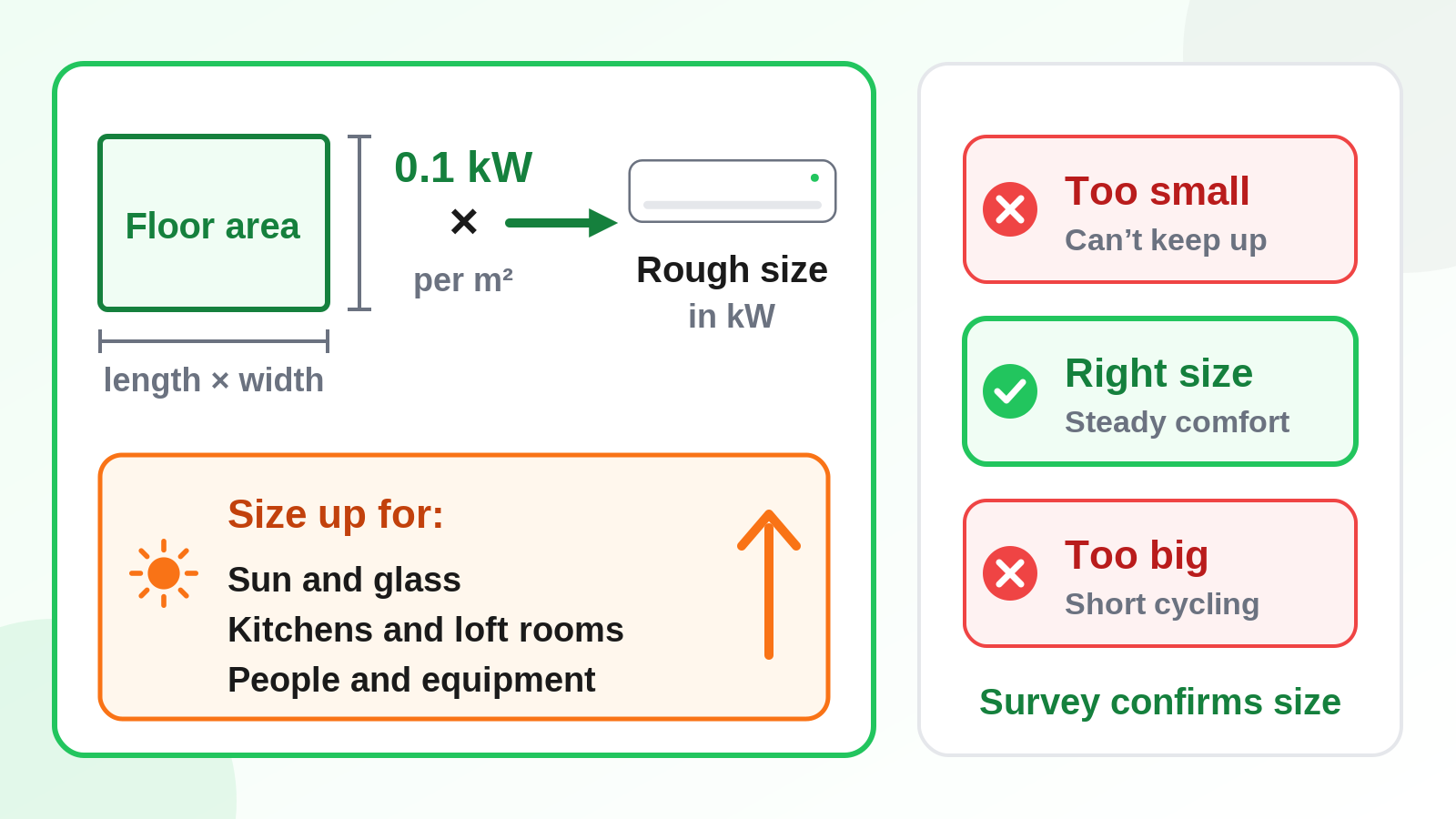
- Size: the unit needs to suit the room, not just be the biggest one available (see our guide on what size air conditioner you need)
A good installer will check all of this during a survey and tell you honestly if a split system is not right for the space.
The verdict
If you need a quick, temporary answer for the odd hot spell, a portable unit will help, as long as you accept the noise, the hose and the higher running costs. If you want a room that stays comfortable all summer, quietly and efficiently, with heating for winter too, a split system is worth the extra outlay.
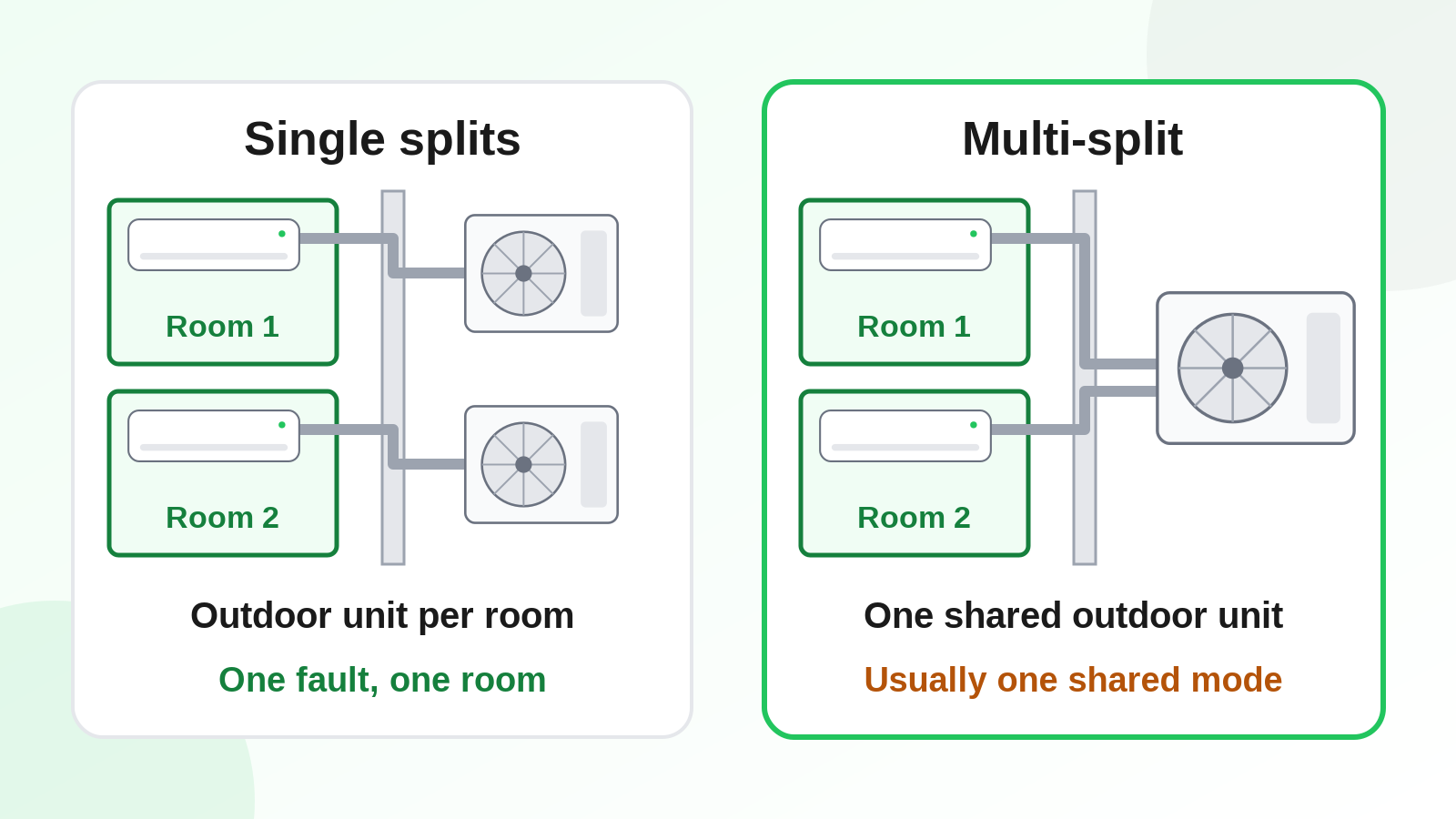
GreenAir installs wall-mounted split and multi-split systems in homes and businesses across Birmingham and the West Midlands. Have a look at our air conditioning installation service, see some of our recent installations, or contact us for a free quote and we will tell you honestly which option suits your room.